Published on June 11, 2025, in EB Live.
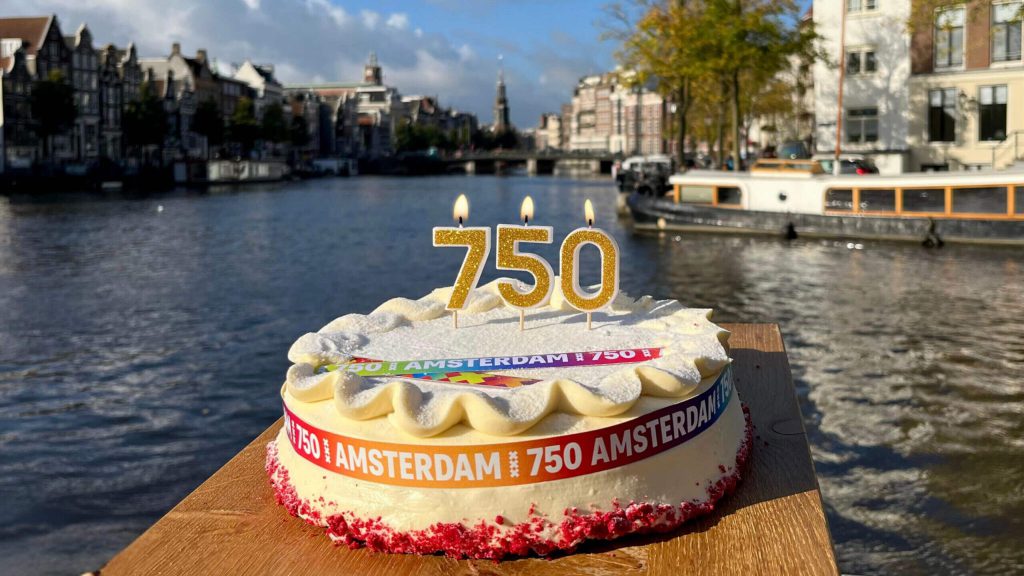
On October 27, 2025, the celebration of Amsterdam’s 750th anniversary will come to a festive close. Over the course of a year, around 400 initiatives will take place, varying in scale and format. We spoke with program director Sietse Bakker about the event, its highlights, and the challenges of organizing what is likely one of the largest birthday celebrations the Netherlands has ever seen.
Sietse Bakker is no stranger to large-scale events. In 2006, he worked at the European Broadcasting Union as Head of Internet for the Eurovision Song Contest and the Junior Eurovision Song Contest. He later became responsible for communications around the Eurovision Song Contest. For Eurovision 2020, he was appointed executive producer by the Dutch broadcaster NOS and AVROTROS. However, the global pandemic forced the event’s cancellation. A year later, Bakker got a second chance, and in 2022, he was appointed by the City of Amsterdam as program director for Amsterdam 750.
The scale and duration of the capital’s anniversary celebration make it a massive undertaking. To illustrate its size, Bakker points to the number of events. “Across the year, there are around 400,” he explains. “These include events, citizen initiatives, projects, exhibitions, and media productions. Many are small-scale, created by and for Amsterdammers. Museums and theaters across the city also drive several large projects. And then there are the so-called ‘tentpoles’—major events that provide structure and require significant people, organization, and budget. There are four of them: the opening concert, Festival on the Ring, SAIL 2025, and the national celebration on October 27.”
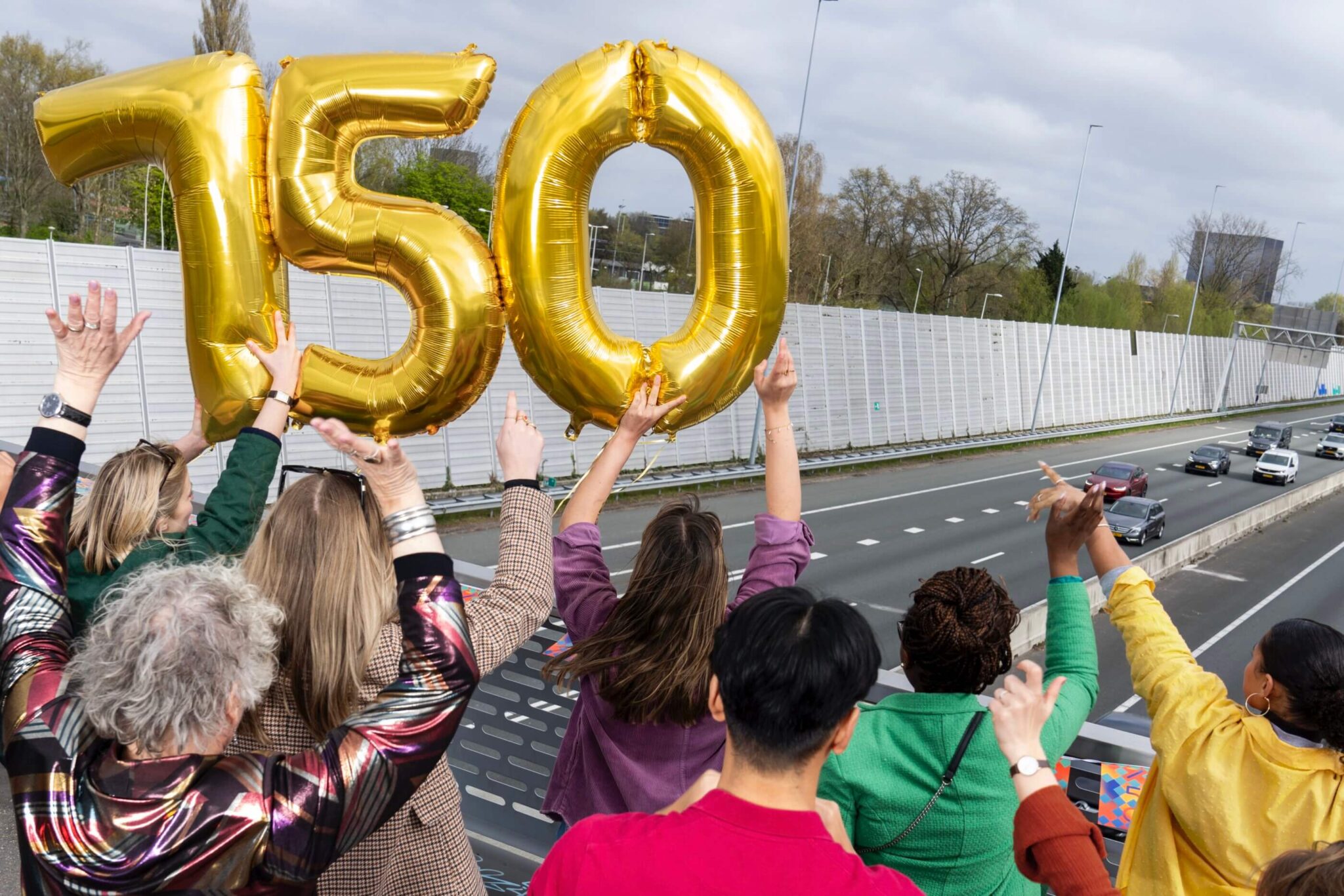
One of the largest and most complex events within Amsterdam 750 is the one-time Festival on the Ring, taking place on June 21. The concept has a long history. “In 1998, NOS, the City of Amsterdam, the Ministry of Defense, and Rijkswaterstaat planned a parade on the ring road to celebrate the new millennium globally,” Bakker says. “However, Defense withdrew after concerns about the millennium bug, and the entire plan was canceled. Over the past 25 years, multiple attempts have been made to organize something on the ring road, but none have succeeded. Until the idea emerged to use this highly symbolic piece of infrastructure to celebrate Amsterdam’s anniversary. From there, things developed organically. Artists wanted to perform, and AVROTROS asked whether their Festival on the Square could be hosted there. Our approach was: let’s see if we can make it happen.”
Bakker describes the planning of such a large-scale event as “almost a military operation.” “The setup and dismantling require enormous effort, especially given the limited time available. The site itself is also a challenge—a 15-kilometer canvas is incredibly attractive, but not without complications. You need programming, infrastructure, and space to manage crowd flow in both directions. You encounter issues you wouldn’t face at a regular festival site. Take the asphalt, for example: it’s fine for rubber tires, but a rotating forklift with a weight can damage the surface. Emergency services were involved from an early stage. The City of Amsterdam has a reputation for slow processes, but that was certainly not the case here. There is real decisiveness and a ‘we’re just going to do this’ mentality, which I also see in the safety partners and other stakeholders.”
The Festival on the Ring is just one of around 200 initiatives taking place on Saturday, June 21. Another example is a 7.5-kilometer run organized by Le Champion, the organization behind events such as the Amsterdam Marathon and the Dam to Dam Run. “Behind every organizing party is a whole army of passionate and experienced people,” Bakker says. “When you combine that with our consortium of production companies, Backbone International, Skills Crowd Management, Tribe Company, Kingcanary, and Bee Agency, you arrive at around 2,000 professionals, including volunteers, all working to deliver the best event of the year. And we shouldn’t forget all the others indirectly involved that day: traffic controllers, police, and enforcement officers.”
Backbone International, together with Skills Crowd Management, Tribe Company, Kingcanary, and Bee Agency, is responsible for production and logistics on the Ring, and also contributes to SAIL Amsterdam.
“A massive operation,” says Pieter Lubberts of Backbone. “When the tender was released, we applied together with several other parties. Given the scale, collaboration was the best approach. With Tribe Company as the lead producer, we were selected, and the project started to take shape. These are productions you only get to do once in your lifetime.”
“One of the biggest challenges is time. You’re dealing with eight events taking place very close together. In terms of materials, it’s manageable, but the timeframe is the real challenge. We’re essentially building a 15-kilometer-long event site. The setup has to be completed in just eight to eleven hours, overnight, in a place where events are never held. It’s completely different from anything we normally do. And that’s before even considering the logistics of getting all the equipment there.”
“It’s going to be a huge challenge, but I’m confident everyone will pull it off. In the end, we hope to look back on a successful operation. Most importantly, we want this celebration to leave a lasting impression, so that in ten years people will still look back on it with pride.”